
Garden Guide
When to Harvest Garlic Scapes for Bigger Bulbs
A hardneck scape is ready for the kitchen when it rises above the leaves and makes its first curl. Cut it low without nicking a leaf. That usually gives the developing bulb more energy, then starts a rough three- to four-week countdown toward bulb harvest.
First check

Photo credit and license
Use this guide
Start with a hardneck scape
Hardneck garlic sends a round flower stalk from the center of the leaves. This is the scape. It rises above the foliage and curls into a loop. If left alone, it later straightens. The pointed sheath at its tip is called the spathe. It encloses the flower parts and the small bulbils that can form later.
Most softneck garlic does not make a scape. If your plants never send up a curling stalk, do not cut healthy leaves looking for one. Check the variety name first. A softneck plant without a scape is behaving as it should.
Cut scapes at the first curl
Wait until the scape has grown above the leaves and made its first loose curl. At that point it is still crisp enough for the kitchen. Once the stalk straightens and the spathe begins to swell, the lower part becomes fibrous and less useful to eat.
Garlic in one bed seldom sends up every scape at once. Walk through the patch every few days and take the stalks that have reached that stage. There is no benefit in waiting for the last plant to catch up.
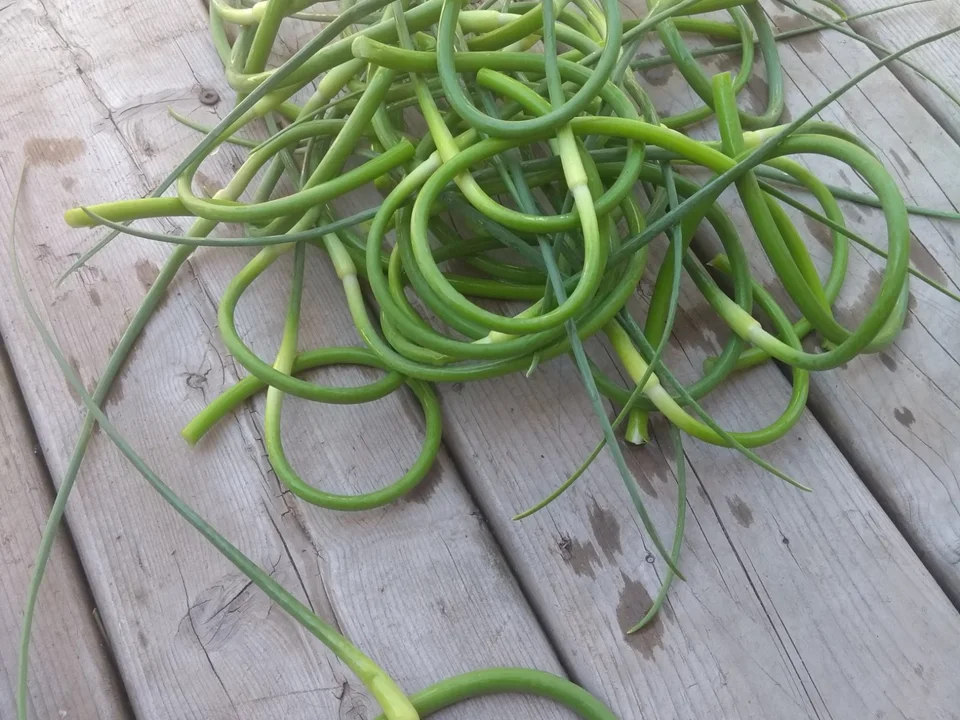
Photo credit and license
Leave the leaves intact when you remove it
Follow the scape down into the plant and cut it as low as you can without cutting a leaf. Clean snips are the simplest choice. You can also snap a young scape at its base if it comes away easily.
Some experienced growers pull a scape straight upward to bring out more of the pale inner stalk. That takes a practiced hand. For most home gardeners, cutting or snapping is the safer choice because the leaves are still feeding the bulb. Do not tug sideways or keep digging into the foliage after the scape has come free.
Use scapes as the start of the bulb countdown
A cut scape does not mean the bulbs are ready that day, but it does mark the final stretch. In many gardens, bulb harvest falls roughly three to four weeks after scapes appear. Start checking the patch after about 20 days instead of treating the calendar as an exact deadline.
Removing a scape has a real payoff. A University of Maine publication cites research showing a 20 to 30 percent yield improvement when scapes are removed early. The result in any one patch still depends on how the crop grew, but scape removal is more than a cosmetic job.
Leave one scape standing for each variety if you want a field cue. It will complete its curl, then straighten and point upright as the bulbil head swells. When that happens, lift a test bulb rather than assuming every plant is ready.
Read the leaves and wrappers before digging
Each green garlic leaf extends below ground as a protective wrapper around the cloves. As a leaf dies, its matching wrapper starts to break down. Five green leaves usually means about five useful wrapper layers on the bulb.
Begin test digging when the lower leaves have browned while at least four upper leaves are still partly green. Lift a representative bulb with a garden fork and inspect it. The cloves should fill the bulb and remain tight inside their wrappers. If the cloves are still round and loose, give the patch more time. If the wrappers are disappearing or the cloves are pushing apart, harvest soon so the bulbs will cure and store well.
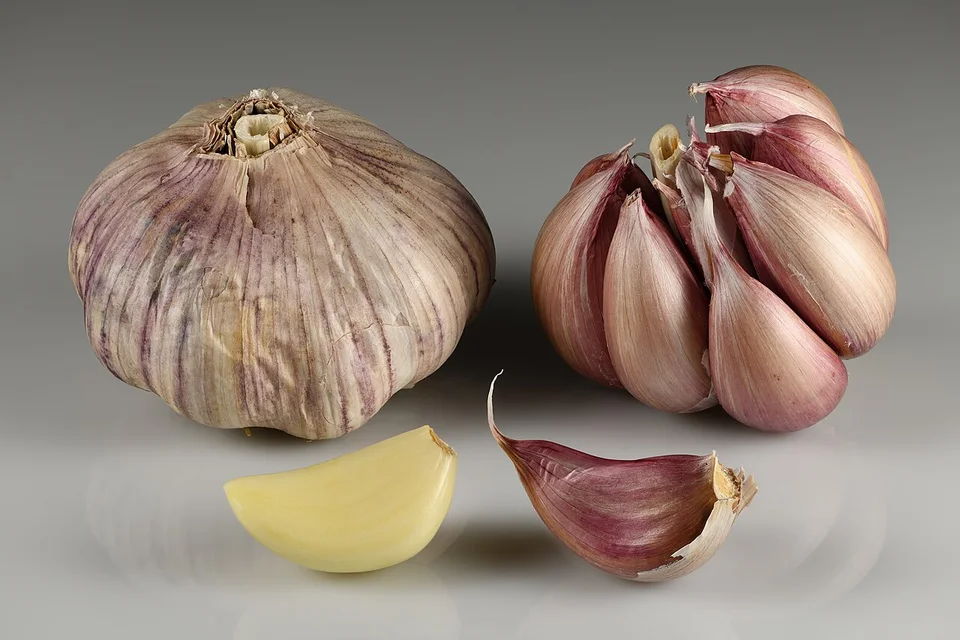
Photo credit and license
Use tender scapes while they are fresh
Fresh scapes have a mild garlic flavor and a crisp bite. Slice them into a stir-fry or blend them into pesto. Trim away a woody lower section if the stalk was harvested late.
The bulbs are still several weeks from their own harvest. Keep the soil evenly moist while they are sizing, then reduce watering as harvest approaches. For the next step after lifting, use the garlic curing guide so good wrappers are not lost in storage.
Questions gardeners ask
Do all garlic plants make scapes?
No. Hardneck garlic usually makes scapes. Most softneck garlic does not, so an absent scape is usually normal.
Should I pull or cut a garlic scape?
A clean cut or a gentle snap at the base is the dependable method. Some experienced growers pull scapes straight upward, but do not force one that resists or pull sideways through the leaves.
Why leave one scape on the plant?
An uncut scape can act as a harvest indicator. When it has finished its curl and stands upright again, begin lifting test bulbs and checking their wrappers.
Does cutting scapes mean garlic is ready to dig?
No. Scape harvest begins the last stretch of the season. Many hardneck crops are ready about three to four weeks later, but leaf color and wrapper condition decide the actual harvest day.
Next natural step
Choose the next garden task
Match the evidence above to what you see, then address the most likely cause before changing anything else.
Open the garden plannerSource notes
- University of Minnesota Extension: Growing garlic in home gardens
- Iowa State University Extension: What are garlic scapes?
- University of Maine Cooperative Extension: Scapes and garlic bulb yield
- University of Maine Cooperative Extension: When hardneck garlic is ready to harvest
- Cornell Cooperative Extension: Garlic leaf wrappers and harvest timing
- Washington State University Extension: Growing garlic in home gardens