
Garden Guide
Trellising Cucumbers, Melons, and Squash
A trellis gets climbing cucumbers off the ground and makes fruit easier to find. Use lightweight mesh for cucumbers, then reserve a rigid frame and sling for a small melon. Keep a large-fruited crop on the ground.
First check

Photo credit and license
Use this guide
Choose a vine that fits the support
A vining cucumber is a natural trellis crop. Its coiling tendrils grab mesh readily, and the fruit is easier to spot once it hangs free. A long cucumber also has room to grow straighter when it is not resting on the soil. Bush cucumbers take less room but do not need a tall structure. Read the seed description before you build anything, because the word cucumber does not tell you how the plant will grow.
Marketmore 76 is a dependable field slicer, while Suyo Long is an Asian type that grows straighter on a trellis. If you want to trellis a small muskmelon, Minnesota Midget is usually listed at two to three pounds. Cucumbers can climb readily on their own, while a young squash vine may need help finding its way through a panel. University of Minnesota Extension recommends trellising varieties with fruit up to about three pounds. Let a larger-fruited crop run along an outer edge of the garden instead of asking a light structure to carry it.
Build the frame before the vines need it
Set the support before planting or soon after. A cucumber can climb quickly once warm weather arrives, and forcing a panel into a bed full of roots is awkward work. The frame needs posts driven firmly into the ground, with the top support high enough for the stated vine length.
Lightweight nylon mesh can carry cucumbers when it is firmly attached to stable posts. Choose rigid four-inch hog wire or a cattle panel for a vigorous vine with small fruit. Use steel T-posts or substantial fence posts, not thin garden stakes or furring strips. Wisconsin Extension describes trellis posts set about two feet into the ground with the top rail roughly six feet above the soil. Maryland Extension keeps posts no more than 15 feet apart on a cucumber trellis and adds a brace when the load demands it. A sagging structure rarely improves after fruit begins to load it.
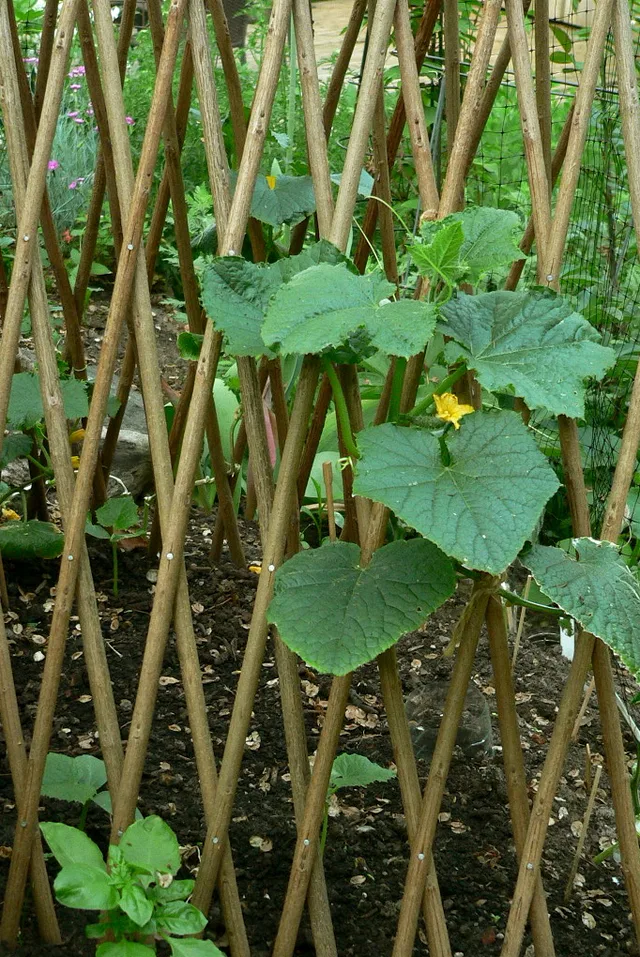
Photo credit and license
Put the trellis where it will not shade the bed
In the Northern Hemisphere, shadows stretch furthest in early morning and late afternoon. Put tall or trellised crops along the north side of a vegetable plot when shade on shorter crops matters. A long north-south trellis gives each face a turn in the sun. If the frame runs east-west, keep it at the northern edge rather than making a wall through the middle of the bed.
A vertical crop still needs a clear path for harvest and watering. Keep the picking side reachable. A handsome arch that fills the only path through a small bed gets tiresome once the vines are wet and fruit is ready. Vertical training lets vining cucumbers stand much closer along a panel than a sprawling row. Maryland Extension recommends thinning them to nine to 12 inches apart. That spacing is for cucumbers, not a blanket rule for melons or winter squash, which still need the room their variety requires.
Guide young growth while it is flexible
Check new growth every few days once the vine begins to run. Set a cucumber stem against the mesh or through a wide opening before it gets stiff. Its tendrils usually take over after that. A young squash vine can need continued weaving through the panel as it lengthens. Use a loose tie only when a stem will not stay where you need it, and never cinch the tie around it.
For a trellised cucumber, remove the first four to six lateral runners near the base. This opens the lower canopy without turning an outdoor vine into a bare, single-stem greenhouse plant. Let the laterals above that point carry their crop. Keep leaves from resting on the soil and remove diseased foliage promptly. Check now and then that the loaded support has not shifted.
Use a sling only when the fruit needs one
Most cucumbers hang without help. Small muskmelons need a sling on a vertical support. Cantaloupes can reach full slip, when the stem releases easily as the fruit ripens. A sling acts as a catch basket as well as support, so a ripe melon does not hit the soil.
Use a wide strip of quick-drying cloth or a nylon sock that can stretch as the fruit grows. Tie both ends directly to the rigid frame above the fruit, never to the vine or a side shoot. A sling supports the fruit. It does not strengthen the trellis. If you can picture the fruit pulling down the whole panel in a summer wind, choose a ground-grown variety or build a different support before the vine gets there.
Clear the vine without abandoning the structure
When the crop is finished, cut the vine at soil level. Once the foliage has dried, it usually comes away from the mesh with less pulling than green vines. Remove ties and slings so they do not weather into next season. If the vine had a confirmed disease, bag and remove its residue instead of leaving it around the garden.
A permanent wire panel can stay in place, but clean off soil and plant debris before winter. Minnesota Extension recommends cleaning and disinfecting noncutting supports used around diseased plants. A 10% bleach solution can be used on stakes and simple trellises after they are cleaned, but bleach can corrode metal, so rinse compatible surfaces and never pour the solution into the garden. Rotate the next cucurbit crop where you can, then check every post and fastening while the frame is empty.
Questions gardeners ask
How do I keep cucumbers from developing a pale side?
Grow vining types on a trellis so fruit hangs free instead of resting on wet soil. Trellising improves color and shape, but pick on time because an overgrown cucumber can still turn yellow and seedy.
Can a cattle panel make an arch over a garden path?
Yes, if both sides are anchored independently and the path remains wide enough for harvest. Build it before planting, then guide the vine toward the outer face or over the top while stems are still flexible.
What if a squash vine reaches the top of the trellis?
Guide the tender tip across the top or down the far side before it stiffens. If there is no safe route left, pinch the growing tip only after the vine has set the fruit you expect it to finish in your remaining season.
Do I need to replace trellis netting every year?
Inspect flexible netting before planting. Replace it once ultraviolet exposure has made it brittle. Also replace netting that stretches under light pressure or stays tangled with diseased vine debris. A permanent wire panel usually only needs cleaning and a check of its anchors.
Next natural step
Choose the next garden task
Match the evidence above to what you see, then address the most likely cause before changing anything else.
Open the garden plannerSource notes
- Trellising, staking and caging: University of Wisconsin-Madison Extension
- Trellises and cages to support garden vegetables: University of Minnesota Extension
- Growing cucumbers in a home garden: University of Maryland Extension
- Cucumber production recommendations: University of Maryland Extension
- Ripening behaviors and harvest indexes of melons: University of Maryland Extension
- Garden row placement: Oregon State University Extension
- Cleaning and disinfecting garden tools and containers: University of Minnesota Extension
- Suyo Long cucumber variety details: Cornell Cooperative Extension